
Уборка с Пн. - Пт. с 8:00 до 17:00


Spring in Estonia arrives fast. Just yesterday your terrace was buried under snow, and today you’re already thinking about dragging a chair outside and sitting in the sun with a coffee. But when you open that door and look down at the boards, the mood drops a little. Grey planks, stains, moss along the edges, and in some spots a slippery green film that wasn’t there in autumn.
This is perfectly normal. A terrace collects everything over the autumn and winter months: rain, leaves, algae, mould. And the frustrating part is that it’s not just surface dirt that the next shower will wash away. It’s the kind of thing that slowly breaks down the surface and makes it slippery and unpleasant.
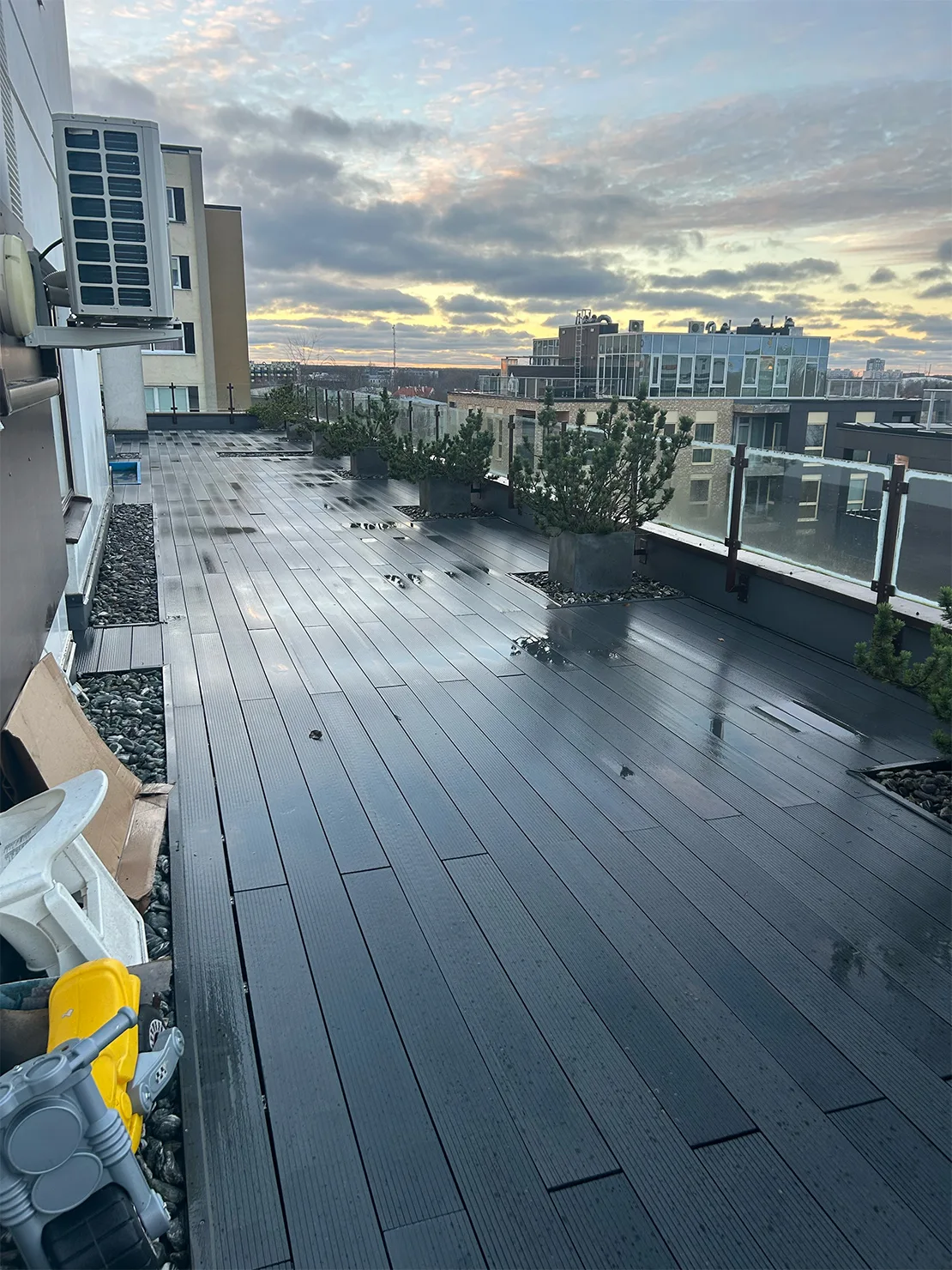
Many people assume a PVC terrace is easier to maintain. That’s partly true – it doesn’t rot or darken from moisture the way wood does. But green algae, moss, and dirt from shoes or barbecues accumulate just as effectively on both surfaces.
A wooden terrace needs a more careful approach. Water pressure and the choice of cleaning products matter here: too aggressive a treatment can roughen the wood fibres or strip out any protective coating. A PVC terrace handles more intensive washing, but even then you need the right products to avoid surface damage and streaking.
In both cases, a garden hose won’t do the job. Most of the contamination lives not on the surface but in the joints, grooves, and fine texture of the material. That’s where mould settles, where moss takes root, where organic matter builds up until you suddenly notice things have got quite bad.
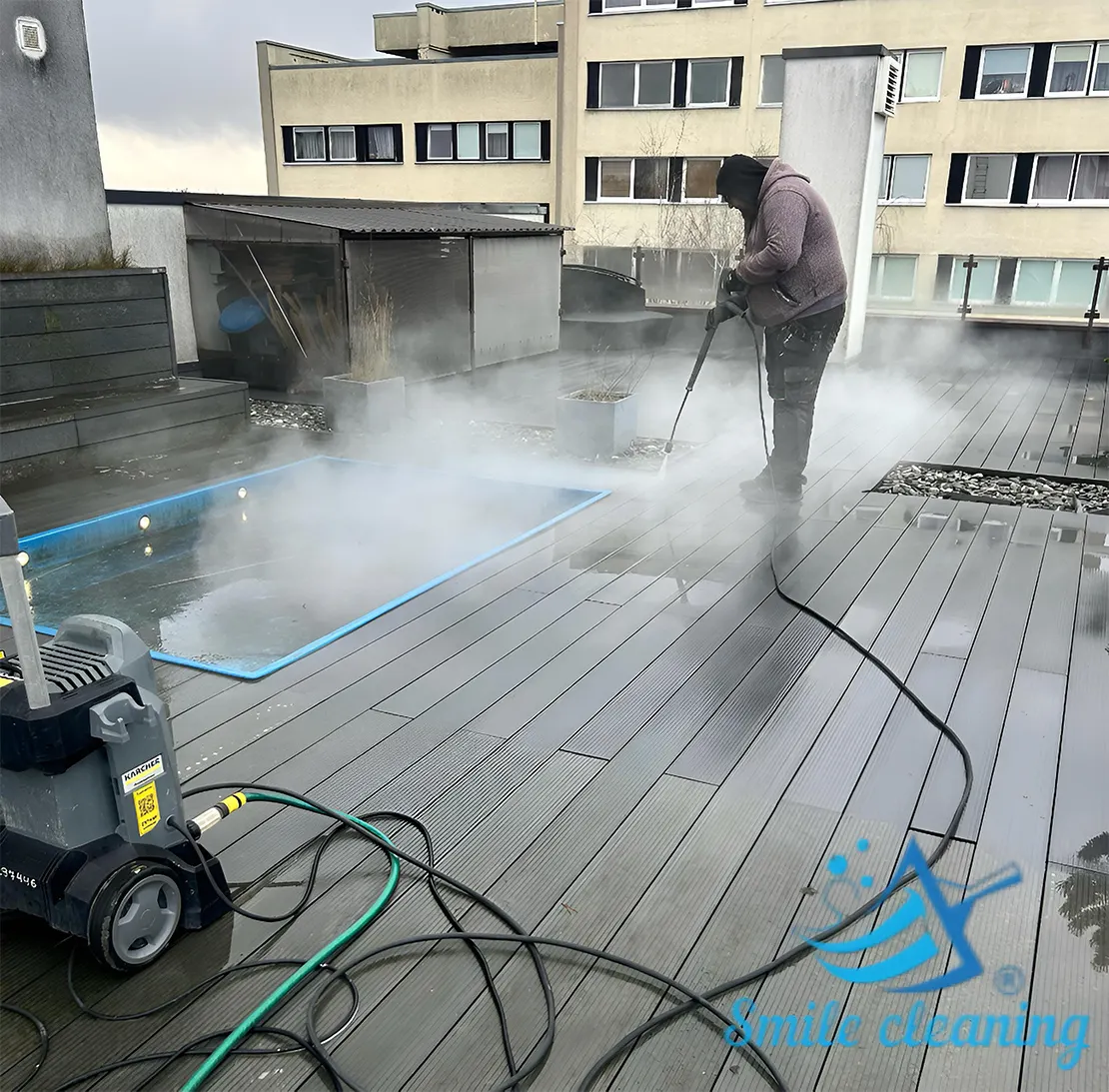
At Smile Cleaning, cleaning a terrace doesn’t just mean showing up with a pressure washer. We start with a proper look. We check the material – wood or PVC, the condition of the surface, and how bad the contamination actually is. This matters because the approach and equipment settings are different for each case.
Then comes the pre-treatment step. We apply a specialist solution that softens biological growth, moss, and mineral deposits so everything lifts easily during the washing phase. After the solution has time to work, we go in with the pressure washer – using the right attachments and pressure settings for the specific material.
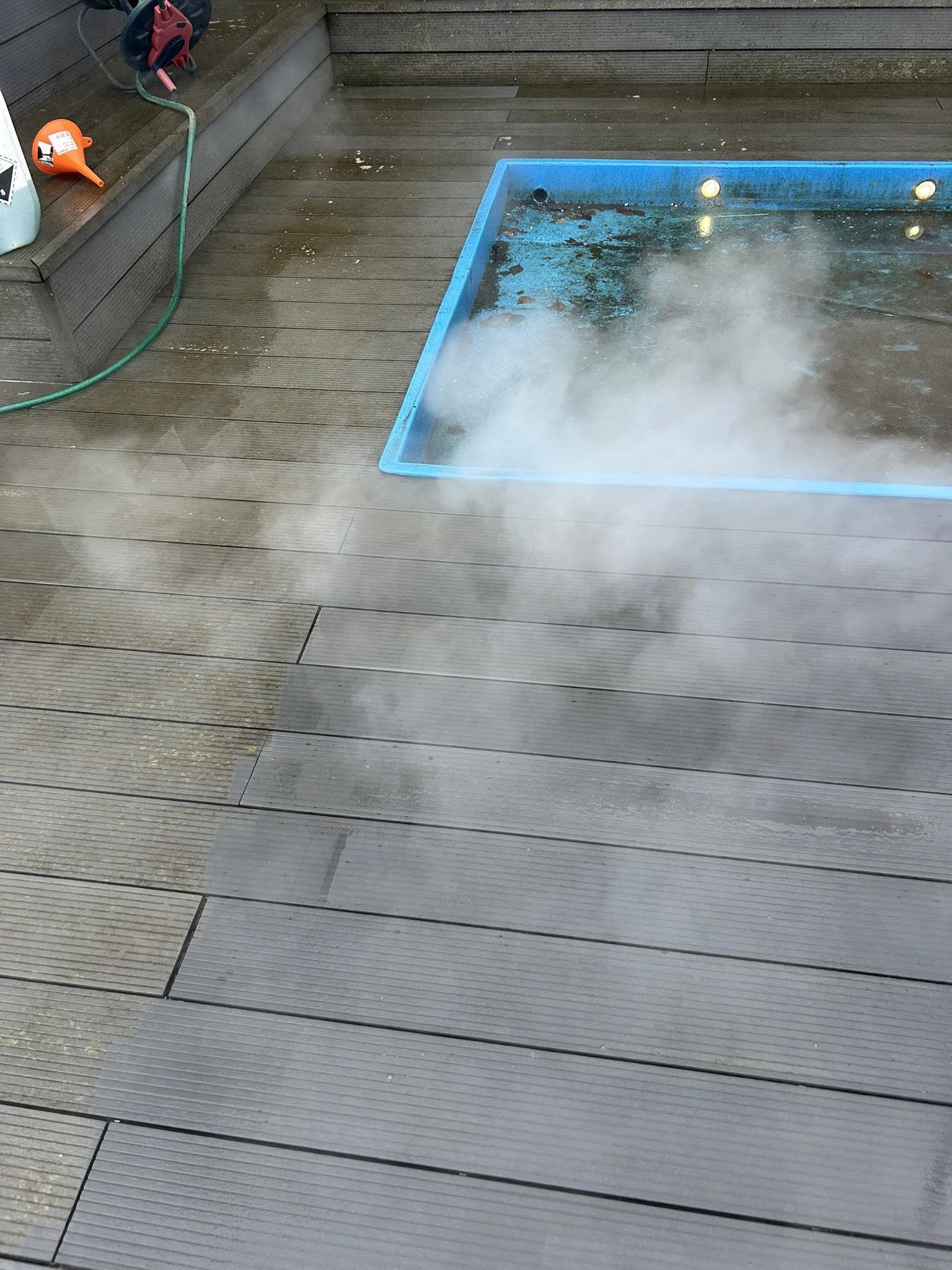
The difference is visible right away. The surface lightens up, the texture comes back, and the slippery film disappears. In cases where a terrace has been neglected for a while, we’ll sometimes recommend a second treatment – we’ll tell you that upfront, before we start.
The price depends on a few things: the size of the terrace, the material, how heavily soiled it is, and whether you want a protective treatment applied to a wooden terrace after cleaning. A typical terrace on a Tallinn family home usually takes between two and four hours from start to finish.
We work across Tallinn and the whole of Harjumaa, including Maardu, Rapla, and Lääne-Harju municipalities. We cover private homes, summer properties, and commercial premises. If you’re not sure whether your address is within our service area, just send us a message or call and we’ll confirm straight away.
First order discount available with promo code SMILE4YOU.
The best time is early spring, once the snow has gone and temperatures are consistently above zero. That gives the terrace time to dry properly before the first summer evenings outside.
Autumn is also a good time, before the first frost arrives. A dirty terrace with moisture sitting in the joints handles winter badly – especially a wooden one. Once a year is the minimum; twice a year is ideal for anyone who wants their terrace to last and look good.
If you’re in Tallinn or Harjumaa and want your terrace looking good again, get in touch. We don’t promise miracles – we just do the job properly.
It’s best to clean terraces at temperatures above +5°C. In colder conditions the treatment products don’t perform as well, and water may not drain before freezing. Spring and early autumn are the ideal seasons.
Yes, we work with both types. The approach and products are chosen based on the material: wood requires lower pressure settings, while PVC handles more intensive cleaning. Just mention your terrace type when booking.
It can, if done without preparation and with the wrong nozzle. That’s exactly why we always start with a chemical pre-treatment and use specialist nozzles with adjustable pressure settings.
It’s not mandatory, but it’s a good idea. Oil or an impregnation product protects the wood against moisture and UV damage. PVC doesn’t need any additional treatment. We can apply it straight after cleaning – just mention it when you book.
In good weather, a terrace dries fully within 4 to 6 hours. On an overcast day or in high humidity it can take up to 24 hours. Walking on the wet surface isn’t recommended.
Any size – from small balcony terraces to large outdoor areas at private properties or commercial buildings. Minimum call-out charge is €60.
Yes, we cover all of Harjumaa. Maardu, Rapla and Lääne-Harju municipalities are all within our service area. If you’re unsure, just call and we’ll confirm.
If a terrace is heavily shaded and stays damp, moss can return. We use products with a long-term anti-biological effect that slows regrowth. For wooden terraces, a protective coating applied after cleaning also helps considerably.
It’s helpful to have someone available at the start – we need access to a water connection. After that, you’re free to get on with your day and we’ll handle the rest.
Call us on +372 555 42697 or +372 536 16980, email contact.smilecleaning@gmail.com, or leave a request at smilecleaning.ee. First-time customers get a discount with promo code SMILE4YOU.
Apartment cleaning! Do what pleases you and entrust the cleanliness of the house to professionals.


E-mail: contact.smilecleaning@gmail.com